

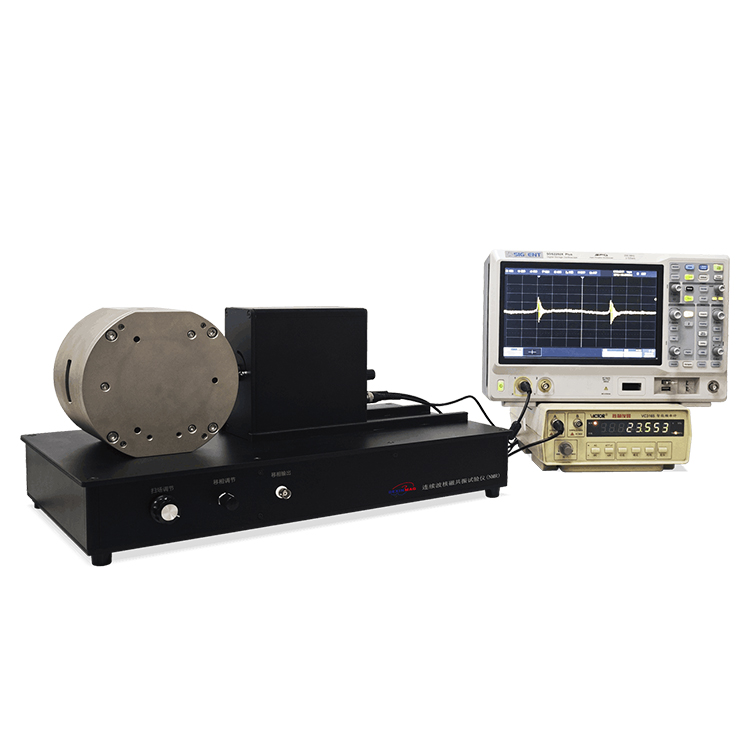
Nuclear Magnetic Resonance (NMR) Instruments
Instrument Composition:
The instrument consists of a magnet, a magnetic field scanning power supply, a limited oscillator, an externally purchased oscilloscope, and a frequency counter.
Product Features
Simple and lightweight structure
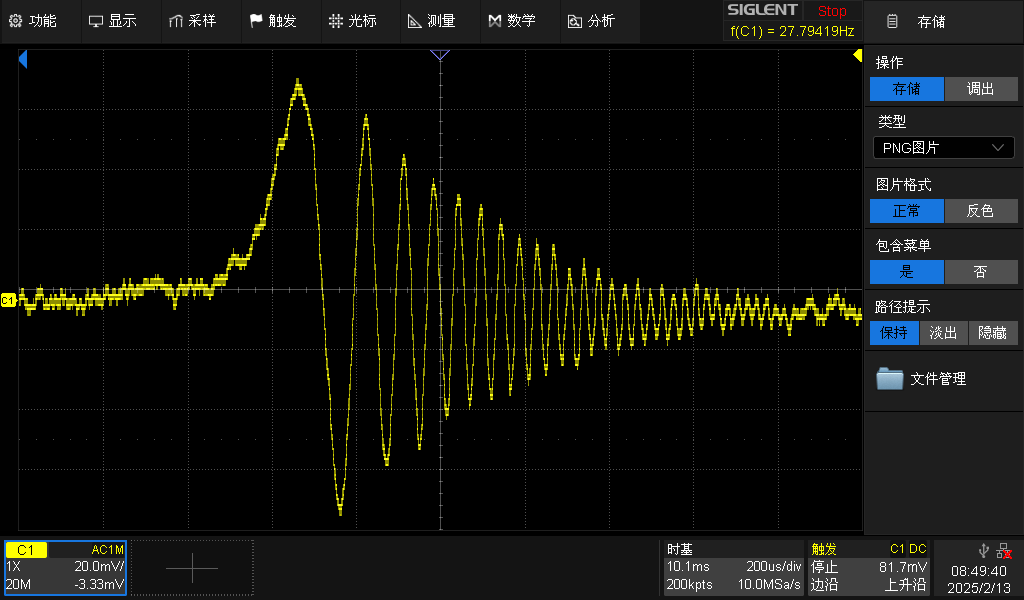
High magnetic field uniformity, capable of observing 20+ tail wave signals
Compact probe, convenient sample exchange
Experimental Details
Measure two samples: hydrogen nuclei in copper sulfate and fluorine nuclei in polytetrafluoroethylene.
1. Observe the NMR signal, accurately measure the constant magnetic field B0, and estimate the error ΔB0.
2. Observe the resonance signal of the fluorine nuclei in the polytetrafluoroethylene (solid) sample and measure the corresponding g-factor.
3. Estimate the resonance linewidth of the fluorine nuclei in the solid polytetrafluoroethylene sample and calculate the relaxation time T2.
Experimental Objectives
1. Understand the principles of nuclear magnetic resonance (NMR) and observe NMR phenomena.
2. Master the methods of NMR and learn how to accurately measure magnetic fields using NMR.
3. Understand the quantitative measurement and physical significance of NMR and measure the basic nuclear parameters of 1H and 19F nuclei.
Specifications of the Continuous Wave NMR Instrument
Signal-to-noise ratio: 100:1 (40dB)
Oscillating frequency: 17MHz-23MHz (depending on the magnet)
Frequency adjustment range: ⨍max/⨍min =1.5
Measured sample: Hydrogen nuclei - 1# CuSO4, fluorine nuclei - 2# polytetrafluoroethylene
